Job Hazard Analysis (JHA)
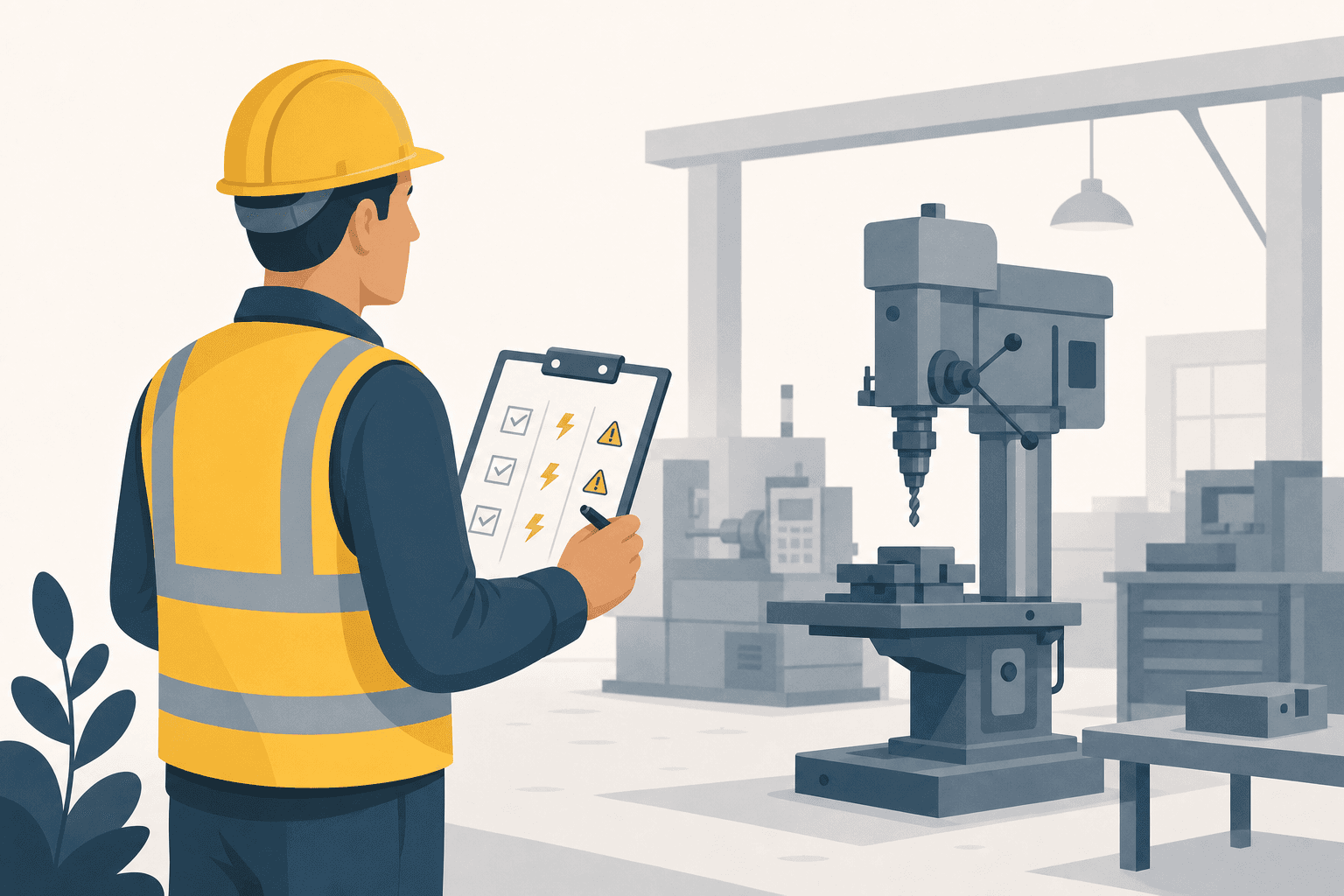
What a JHA is
A Job Hazard Analysis is a technique that focuses on job tasks as a way to identify hazards before they cause injury. You break a job down into a sequence of steps, examine each step for the hazards it creates, and then determine the controls that eliminate or reduce those hazards. The terms JHA and JSA are used interchangeably across US industry.
Unlike the risk-matrix documents used in the UK, Australia, and New Zealand, a conventional US JHA doesn't score each row for likelihood and consequence. It stays focused on three practical questions per step: what's the task, what could hurt someone, and what will we do about it.
What OSHA expects
OSHA doesn't mandate a specific “JHA form” by name, but the expectation is clear. The General Duty Clause (Section 5(a)(1)) of the OSH Act requires employers to provide a workplace “free from recognized hazards.” The standards in 29 CFR 1910 (general industry) and 29 CFR 1926 (construction) then set specific requirements, and 29 CFR 1910.132(d) explicitly requires a hazard assessment to determine what PPE is needed.
OSHA actively recommends the method in its booklet Publication 3071, “Job Hazard Analysis.” In practice, a documented JHA is the standard way to show you have identified and controlled the hazards of a task — the evidence behind a compliant safety program.
What a JHA contains
RiskForms builds a US JHA with the conventional three-column structure — no risk-rating matrix, in line with standard OSHA-aligned practice.
| Column | What goes in it |
|---|---|
| Job step | Each sequential phase of the task, broken into a handful of granular steps. |
| Potential hazards | The specific hazards that could realistically cause harm during that step. |
| Preventive controls | The preventive controls, chosen using the hierarchy of controls. |
Which jobs to analyze first
OSHA suggests prioritizing your JHAs. Start with jobs that fit these patterns.
High injury rates
Jobs where injuries or illnesses have already occurred, or where they happen frequently.
Severe potential
Tasks with the potential for serious harm, even if no incident has happened yet.
New or changed jobs
New processes, changed procedures, or tasks altered by updated equipment or materials.
Complex tasks
Jobs complex enough that written instructions are needed to do them safely.
How to build one
The method mirrors a standard risk assessment: break the job into steps, identify the hazards in each step, and assign controls using the hierarchy of controls. If you're new to it, our guide on how to do a risk assessment walks through the full process, and hazard identification covers how to spot what could go wrong.
RiskForms does the first draft for you: describe the task, and it produces a complete JHA in the OSHA-aligned format — job steps, hazards, and preventive controls — ready for a competent person to review, adjust, and sign.
Official guidance & sources
Always confirm the current requirements with the regulator for your region.
Related documents & guides
OSHA JHA / JSA
SWMS (Australia)Safe Work Method Statement
RAMS (UK)Risk Assessment & Method Statement
SSSP (New Zealand)Safe System of Work Plan
Job Hazard Analysis (Canada)Provincial & federal JHA
How to do a risk assessmentStep-by-step walkthrough
What is a risk assessment?Definition & legal context
Hazard identificationSpotting hazards before work
Risk matrix explained5×5 likelihood × consequence
Hierarchy of controlsElimination through to PPE
Generate your Job Hazard Analysis
Describe the task and get a complete, OSHA-aligned JHA in seconds — ready to review and sign.
Try RiskForms free